Marine & Dockside Cleaning Services in Liverpool
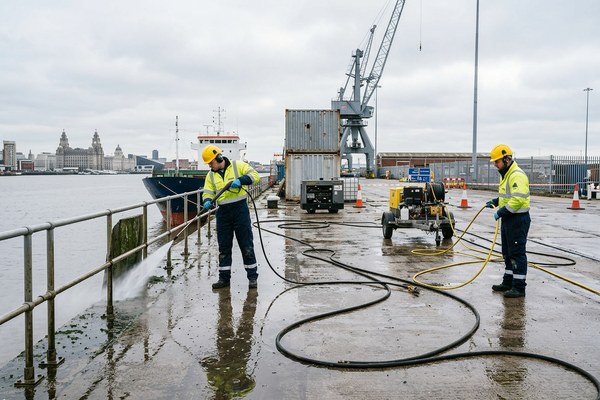
Marine & Dockside Cleaning helps ports, quayside operators and marine-linked industrial sites keep working areas cleaner, safer and easier to manage under demanding surface conditions. On Liverpool industrial sites, the strongest results usually come from survey-led planning that reflects live operations, residue type, access limits and the condition of the working environment before labour is scheduled.
On many Merseyside projects, early planning works better when it connects naturally with commercial exterior cleaning because that linked service can expose hidden contamination, improve access or prepare the area before the main programme begins. That joined-up approach often produces more accurate pricing, fewer scope changes and a cleaner handover for engineering or site-management teams.
Why this service matters on Liverpool sites
In Liverpool dockside and marine environments, salt exposure, traffic residue, cargo dust, standing moisture and ingrained surface contamination can build quickly across working areas, access points and adjacent structures. Typical reasons for action include slippery surfaces, cargo-related contamination, staining around high-traffic work areas, poor presentation and the need for better surface control around marine operations. In live operational environments, that usually means minor cleaning issues become bigger production, presentation or maintenance problems if they are left to drift.
What a realistic project usually includes
A realistic scope may include quayside surfaces, plant surrounds, operational walkways, loading zones, barriers and contamination hotspots where surface control affects safety and site presentation. The strongest scopes also define what will be protected, what finish is expected at handover and which areas need to be prioritised first to support site operations.
| Work option | Best fit | Typical duration | Expected outcome |
|---|---|---|---|
| Targeted dockside clean | One quay or work zone | 1 day | Fast improvement in surface control |
| Phased marine clean | Several linked operational areas | 1-3 days | Improves safety without blocking flow |
| Full dockside cleaning programme | Large marine or port facility | 2-4 days | Best for consistent control and presentation |
Costs, timings and what changes the budget
Targeted dockside cleaning tasks in Liverpool often begin around £1,800 to £3,500, while larger marine-linked cleaning programmes with phased access can range from £4,000 to £8,500. Smaller dockside areas may be completed in one day, but broader marine cleaning programmes usually require two to four days when tide, traffic and cargo movements are factored into the plan. These are realistic planning ranges rather than fixed quotations, but they reflect the labour, access and coordination issues commonly seen across Liverpool and Merseyside industrial environments.
A practical programme should also reflect maintenance of work equipment so the work is managed safely around contamination risks, surrounding activities, plant condition and the site’s own operating procedures.
What to confirm before work starts
Planning should address dock traffic, restricted zones, drainage, residue type, loading schedules, exposure to weather and the order in which working areas can be cleaned safely without disrupting operations. Clear pre-start decisions usually reduce wasted labour, avoid duplicated access costs and make the handover standard easier for the client to measure.
Local factors that affect delivery
In Liverpool, delivery plans are often influenced by dock traffic, older industrial buildings, food production standards, marine exposure, tight urban access and the need to coordinate around warehousing, engineering or processing activity without creating avoidable downtime. Alternative Cleaning Solutions (NW) Ltd typically surveys access routes, drainage constraints, residue behaviour, shift patterns and waste-handling requirements so the cleaning specification matches the real site rather than a generic national template. That local detail helps clients compare costs more accurately and gives site managers a more credible timeline for live work, planned outages and phased handovers.
Where related services can improve the outcome
Even when the brief looks straightforward, better results often come from pairing the work with high-level & access cleaning if that linked service reduces rework, shortens the total programme or improves the condition of surrounding assets. On larger sites, planning linked scopes together is often more efficient than discovering those dependencies once labour and equipment are already on site.
For procurement teams and site managers, that joined-up planning also makes it easier to compare quotations, align cleaning windows with engineering priorities and avoid the false economy of treating connected contamination issues as separate one-off jobs. In practice, Liverpool projects tend to run more smoothly when access, residue removal, shutdown support and presentation standards are considered together rather than passed between multiple short-term contractors.
Frequently asked questions
Why is dockside cleaning more demanding than standard exterior cleaning?
Because marine environments add salt, moisture, cargo residue and operational traffic that can make contamination spread faster and become harder to control.
Can marine cleaning be phased around live port operations?
Yes. Many Liverpool dockside projects are planned around loading schedules, restricted zones and operational traffic so cleaning supports the site instead of interrupting it.
What areas are usually prioritised first?
Walkways, working surfaces, loading zones and contamination hotspots are usually prioritised first because they affect safety and operational control most directly.
Request a Liverpool industrial cleaning survey
If you need marine & dockside cleaning in Liverpool or the surrounding Merseyside area, use the homepage at industrialcleaningliverpool.co.uk to request a survey-led recommendation, a realistic budget range and a programme that fits live operations, shutdown windows and long-term site standards.