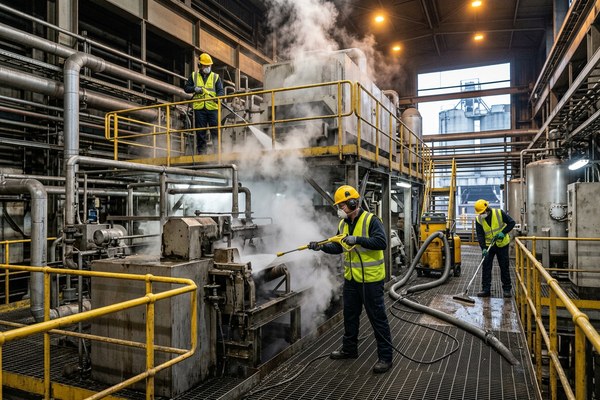
Liverpool Factory Shutdown Cleaning for Faster Turnarounds and Cleaner Restart Conditions
Liverpool Factory Shutdown Cleaning for Faster Turnarounds and Cleaner Restart Conditions
A planned shutdown is one of the few times an industrial site can properly reset cleaning standards, reach difficult areas and prepare equipment or structures for maintenance without fighting against normal production. That makes Factory Shutdown Cleaning in Liverpool a high-value service when it is scoped well and sequenced correctly. Done properly, it helps maintenance teams access what they need, shortens the time spent working around built-up contamination and supports a cleaner, safer restart.
Alternative Cleaning Solutions (ACS) states on its homepage that industrial shutdown cleaning can be completed during planned maintenance periods to minimise disruption and ensure facilities are cleaned safely and efficiently before operations resume. The same homepage positions the company across factories, processing facilities, engineering sites and other industrial environments throughout Liverpool and Merseyside. For operations teams planning a maintenance stop, that combination is exactly what matters: industrial context, safe delivery and a schedule built around the shutdown window.
Why shutdown cleaning matters more than routine cleaning
Routine cleaning keeps standards from slipping too far during normal operations, but it cannot always reach every area that matters. Shutdown periods create the access window needed for deeper cleaning around plant, structures, high-use production areas and contamination hotspots that are hard to treat while the site is live.
What sites usually try to achieve during a shutdown
The most common goals are to remove heavy contamination, improve maintenance access, restore housekeeping standards, prepare surfaces for inspection or repair and make restart conditions safer and cleaner. In Liverpool industrial settings, this can be particularly important for manufacturing, food production, engineering and process sites where residue builds steadily over time.
The planning advantage of a structured shutdown clean
Shutdown cleaning works best when it is treated like part of the maintenance programme rather than an add-on. Cleaning teams need to know what areas are released, which trades are working nearby, what access restrictions apply and what must be ready for restart. ACS notes that projects can be planned around operational requirements to minimise downtime and disruption. During a shutdown, that translates into tighter sequencing, clearer handovers and less wasted time.
It also helps safety performance. ACS states that work is delivered in line with relevant health and safety procedures, risk assessments and industry standards. During a shutdown, when multiple teams may be on site at once, that structured approach becomes even more important.
Costs, timings and scope expectations
Shutdown cleaning is highly variable, so most projects are priced after a site review and discussion of the shutdown plan. Indicative market budgets can range from the low thousands for smaller, focused shutdown cleaning packages to significantly more for multi-area, multi-day projects involving heavy contamination, access equipment, out-of-hours attendance or integrated work around several trades. The budget is usually shaped by the number of released areas, the level of residue, required access equipment and the strictness of the restart deadline.
In timing terms, some shutdown cleans are completed in a single day or weekend window. Others run alongside a planned outage over several days. The important point is not only labour hours but whether the cleaning sequence helps the maintenance plan run faster.
Shutdown cleaning styleBest use caseTypical timingMain operational valueTargeted shutdown cleanOne production area or priority asset groupOne shift to 1 dayQuick reset before restartFull-area shutdown cleanWider plant or factory maintenance stop1 to several daysBetter access and broader housekeeping recoveryPre-inspection cleaningBefore engineering inspection or repair workEarly in shutdown windowClearer access and visibilityRestart-preparation cleanFinal clean before operations resumeEnd of shutdown windowCleaner handover and safer restart
How a strong shutdown cleaning plan is usually built
1. Define the released areas and restart deadlines
The cleaning scope should be tied to the shutdown programme from the start. Which zones are fully offline? Which areas are shared with other contractors? Which assets must be handed back first? The clearer those answers are, the smoother the work tends to run.
2. Sequence cleaning around other trades
Shutdown periods are busy. Engineers, maintenance teams, inspectors and sometimes external specialists may all be working at once. Cleaning that is scheduled at the wrong time can create congestion or duplicate effort. Cleaning that is scheduled well can help every other team work more effectively.
3. Use the shutdown to reset future standards
A shutdown clean should not only solve the current problem. It should also show where the site needs recurring factory cleaning, plant cleaning or high-level support between shutdowns so the next maintenance stop starts from a better baseline.
Why Liverpool plants benefit from early contractor involvement
Liverpool and Merseyside industrial sites often operate to tight turnaround expectations, especially where production output, delivery commitments or seasonal demand are involved. Early cleaning input helps sites avoid under-scoping the shutdown window. A contractor familiar with industrial environments can help identify what needs to be cleaned before maintenance starts, what can happen in parallel and what should be left until final restart preparation.
ACS also highlights service coverage across manufacturing, logistics, marine, engineering, food production and warehousing sectors. That broad operational understanding is useful where shutdown work overlaps with different site standards and access conditions.
Frequently Asked Questions
When should shutdown cleaning be booked?
The earlier the better. Booking early gives time to review access, define scope, coordinate with maintenance teams and avoid last-minute congestion during the shutdown.
Can shutdown cleaning reduce downtime?
Yes, when it is properly sequenced. Cleaner access and clearer work areas can help maintenance teams move faster and reduce wasted time during the outage.
What affects the cost of Factory Shutdown Cleaning in Liverpool?
Key factors include the number of released areas, contamination level, access equipment, working hours, shutdown duration and how tightly the service must align with other contractors.
Is shutdown cleaning only useful for large factories?
No. Smaller industrial and process sites can benefit too, especially when contamination has built up in ways that are hard to address during normal operations.
Plan your next shutdown cleaning window
If your site has a planned stop coming up, Factory Shutdown Cleaning in Liverpool should be scoped as part of the turnaround plan, not left until the last minute. For a Liverpool or Merseyside shutdown cleaning quote from ACS, visit https://industrialcleaningliverpool.co.uk/.
