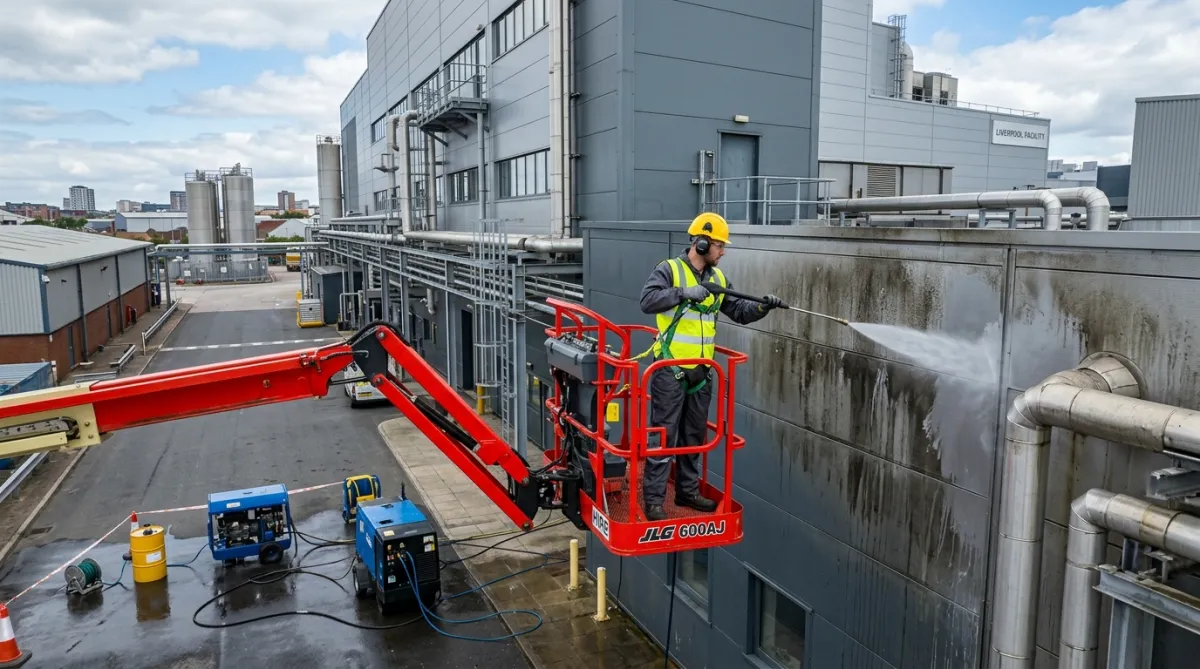
Liverpool High-Level & Access Cleaning for Safer Elevated Structures and Better Maintenance Access
Liverpool High-Level & Access Cleaning for Safer Elevated Structures and Better Maintenance Access
High-level areas are often the most neglected parts of an industrial site. Steelwork, ducting, cladding, pipework and other elevated structures can gather dust, grease, cobwebs, residue and general contamination for months before anyone sees the true level of build-up. When that happens, the site does not just look untidy. Access becomes harder, inspections become less reliable and contamination can spread downward into working zones. That is why High-Level & Access Cleaning in Liverpool should be planned as part of routine site control, not left until the problem becomes obvious.
Alternative Cleaning Solutions (ACS) states on its Liverpool homepage that high-level industrial cleaning can include steelwork, ducting, cladding, pipework and elevated structures using appropriate access equipment and safe working methods. The homepage also confirms that access solutions including MEWPs and scaffolding can be used where required. Those are important local trust signals because high-level cleaning is only useful when the contractor can safely reach the area, clean it properly and work around live industrial schedules across Liverpool and wider Merseyside.
What High-Level & Access Cleaning usually covers
This service is typically used for overhead steel, roof-level beams, high pipe runs, service gantries, warehouse internals, exterior upper cladding, elevated ledges and similar hard-to-reach surfaces. On industrial and commercial sites, those areas often collect fine dust, process residue or grime that standard floor-level cleaning will never touch.
Why Liverpool sites should care about overhead contamination
Liverpool industrial premises often combine warehousing, engineering, manufacturing and logistics activity in one building. In those conditions, contamination does not always stay where it starts. Dust from high-level beams can fall into operational zones. Dirty ducting and cladding can undermine housekeeping standards. Neglected elevated surfaces can also make it harder to see leaks, corrosion points or damage during maintenance rounds.
The operational value of cleaning at height
The biggest benefit of high-level cleaning is control. When elevated surfaces are kept cleaner, sites can reduce contamination drift, improve visual standards and create safer conditions for inspection and maintenance. ACS also states that industrial cleaning projects can be planned around operational requirements to minimise downtime and reduce disruption. That matters because cleaning at height often needs segregation, access equipment positioning and timed work windows that fit around site traffic.
There is also a compliance and safety angle. ACS says all work is completed in line with relevant health and safety procedures, risk assessments and industry standards. For work at height, that should translate into a clear access method, controlled work areas and a plan for carrying out the task without creating unnecessary risk to operatives or people below.
Budget ranges and timescales for planning
High-level cleaning is rarely priced with a one-size-fits-all rate because height, access and contamination vary too much from site to site. As an indicative market guide rather than a published ACS tariff, a smaller targeted clean using straightforward access may sit in the high hundreds to low thousands of pounds. Larger internal warehouse cleans, multiple elevations, external facade work or multi-day projects using specialist access equipment can rise into the low-to-mid four figures.
Timing depends on height, access restrictions and how much area is being released at once. A focused MEWP clean may fit into a single shift, while a wider internal or external package may take one to several days. The critical planning factor is usually not cleaning speed alone but whether the work can be phased around operations safely.
Access-led cleaning optionBest fitTypical timeframeMain advantageTargeted MEWP cleaningSpecific high-level zone or exterior elevationOne shift to 1 dayFast access to priority areasScaffold-supported cleaningLarger areas needing longer duration access1 to several daysStable access for broader coverage. Internal high-level cleanSteelwork, ducting or cladding inside active premisesPhased visits or out-of-hours workLower disruption to site activityCombined maintenance cleanCleaning linked to inspection or repair planningMatches maintenance windowBetter visibility and easier handover
How a strong high-level cleaning plan is built
1. Survey the elevated contamination and access limits
Before any work begins, the site should identify what needs to be cleaned, how high it sits, what access route is practical and what must remain operational below. That avoids under-scoped quotes and helps prevent avoidable disruption.
2. Match the access method to the real environment
ACS specifically references MEWPs and scaffolding. That matters because the right access choice depends on aisle width, floor loading, reach, obstruction points, weather exposure and duration. A Liverpool warehouse interior may suit one method, while an external industrial elevation may suit another.
3. Clean in phases and hand areas back properly
The best high-level cleaning projects are sequenced logically so that areas can be isolated, cleaned and returned to use without causing avoidable knock-on delays elsewhere on site.
Why local experience matters in Liverpool
Liverpool and Merseyside sites often mix industrial output, storage activity and maintenance pressure in the same space. Some buildings are older and harder to access. Others require work around loading times, shift changes or marine-exposed weather. A contractor familiar with industrial cleaning in Liverpool is better placed to plan realistic attendance windows and sensible access arrangements rather than treating the job like a generic commercial clean.
Frequently Asked Questions
What surfaces are usually included in High-Level & Access Cleaning?
ACS highlights steelwork, ducting, cladding, pipework and elevated structures. Exact scope depends on the site layout and contamination type.
Can this work be done while a site is operational?
Often yes, if the work is planned around operational requirements with suitable segregation and safe access controls. ACS specifically says projects can be scheduled to minimise downtime and disruption.
What affects the cost of high-level cleaning in Liverpool?
The biggest factors are height, access method, contamination level, work area size, internal versus external conditions and whether the site needs out-of-hours attendance.
Do you always need a scaffold for this type of cleaning?
No. ACS notes that access solutions including MEWPs and scaffolding can be used where required. The best method depends on reach, duration and site constraints.
Request a high-level cleaning quote
If elevated dust, dirty cladding, overhead residue or difficult-access structures are affecting housekeeping or maintenance standards, High-Level & Access Cleaning in Liverpool is best planned before build-up spreads into wider operational problems. To request a quote from ACS, visit https://industrialcleaningliverpool.co.uk/.
